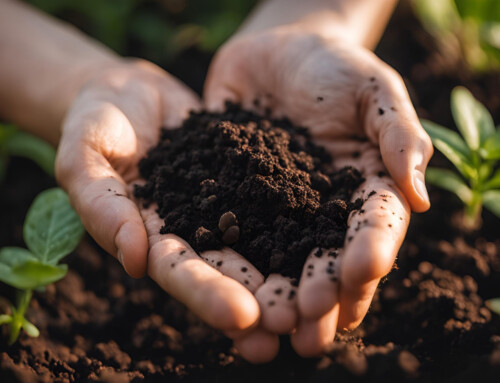
Every leaf, branch, and blade of grass holds potential… if it’s handled the right way.
Composting isn’t just throwing organic waste in a pile. Done well, it regenerates soil, supports ecosystems, and reduces environmental harm.
At Veransa, certain principles guide our work. They’re not secrets, just practices we believe the wider community could adopt more broadly.
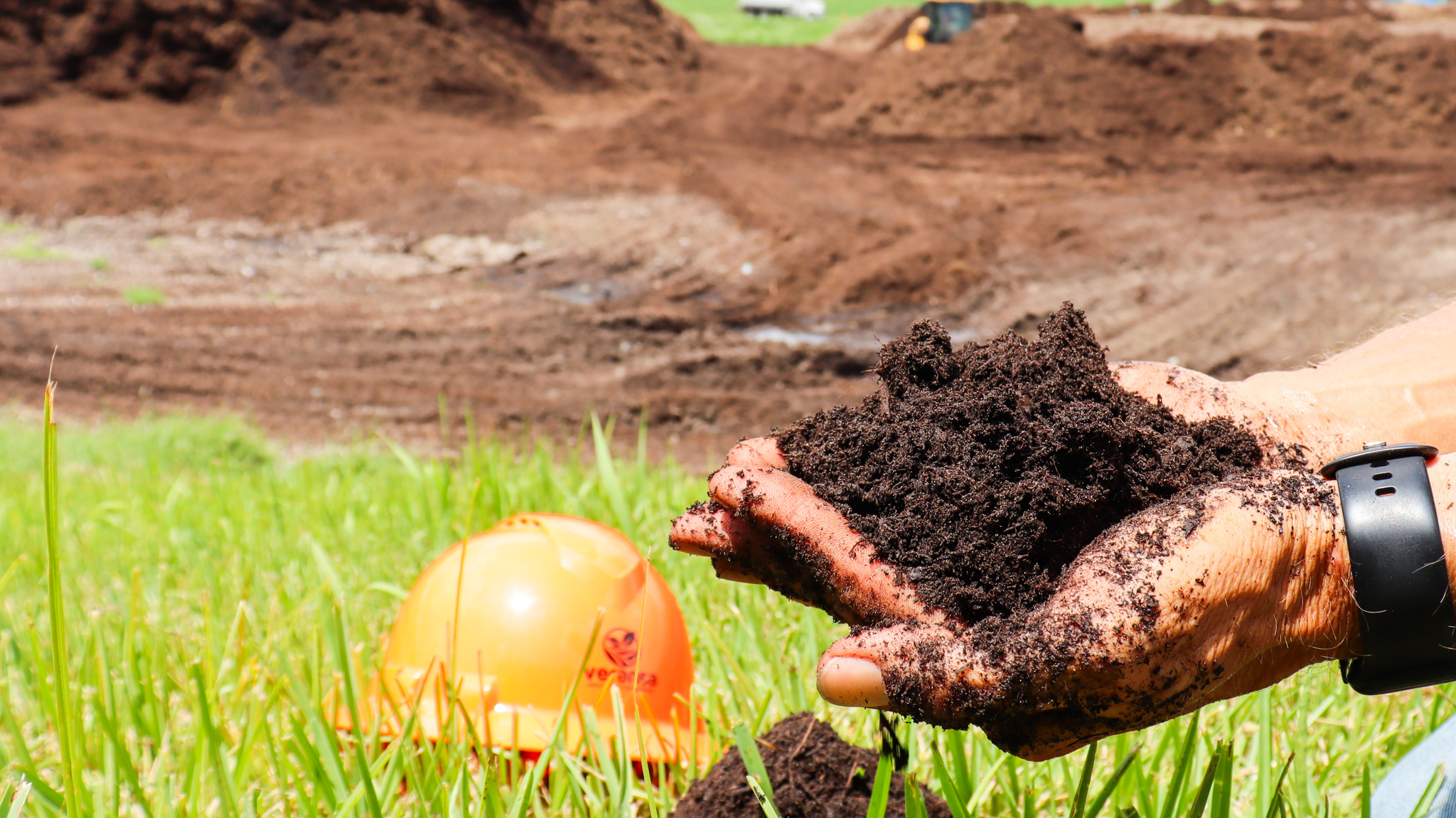
What does “clean composting” actually mean?
To be meaningful, composting must go beyond “just gathering organic waste.” In our experience, these criteria are essential:
- Feedstock quality. Only plant-based green and wood waste, no biosolids, no animal byproducts. Clean input means fewer contaminants, fewer risks.
- A controlled, replicable process. Aeration (through turning windrows or other means), moisture management, temperature control. making sure the composting environment supports beneficial microbial activity and suppresses pathogens.
- Rigorous testing & quality assurance. Using standardized testing to verify nutrient content, pH, presence of heavy metals, absence of weed seeds or pathogens. For example, under the US Composting Council’s STA (Seal of Testing Assurance). Regular testing (monthly or as needed) creates accountability.
Key practices that improve soil and ecosystems we see working:
- Optimizing the Carbon to Nitrogen Ratio
A well-balanced mix (for example, about 20:1–25:1 C:N in Veransa PRIME) supports strong decomposition without excessive ammonia or odor issues. It also helps the final compost have stable organic matter.
- Achieving Consistency in Physical Texture
Screening the finished compost to remove oversized fibers, wood chunks, or un-decomposed bits helps ensure it is usable in various settings — gardens, farmland, public landscapes — without causing application issues.
- Eliminating Harmful Residues
Making sure compost is free from heavy metals, synthetic chemicals, or disease vectors is critical. Using clean raw materials and testing at multiple stages helps safeguard soil and plant health.
- Enhancing Water Holding & Soil Structure
Good compost improves soil’s capacity to retain moisture, reduces runoff, builds soil aggregates, and can help plants be more resilient in drought or heavy rain. These ecosystem services often go unseen but deliver real value.
Why do these practices even matter?
- Preventing pollution: Clean composting helps avoid introducing harmful substances into soil, water bodies, or food systems.
- Supporting microbiome health: Plants and soils depend on microbes; composting done right promotes beneficial microbial communities.
- Resilience in agriculture & green spaces: Soils amended with high-quality compost are better at handling climate stressors (drought, heavy rain, heat).
- Scaling circular systems: When clean, trusted composting becomes more common, waste streams become resources rather than problems.
How can more people practice clean composting?
Small shifts make a big difference. Here are actionable suggestions:
- When sourcing compost or soil amendments, ask for test reports: nutrient content, heavy metals, pathogen indicators.
- If you’re composting yourself (on a farm, garden, or community site), make sure you can control moisture and aeration and monitor temperatures through the pile.
- Avoid mixing in questionable materials (biosolids, uninspected animal products, chemically treated wood) without knowing their history.
- Support compost programs in your region that are transparent and follow third-party auditing/stewardship standards (e.g. STA).
Clean composting isn’t just an agricultural or environmental specialty, it’s foundational to healthy soils, safe food, clean water, and resilient ecosystems. The practices outlined here (feedstock quality, controlled process, rigorous testing) are more than ideals, they are lived methods.
When people adopt these practices, the benefits ripple outward. From soil to plant, from water cycle to climate. It’s not about selling a product. It’s about sharing knowledge, elevating standards, and letting the work be its own proof.